AI agents are changing how enterprises automate work. Unlike traditional chatbots, they can plan tasks, retrieve information, call tools, interact with business systems, and coordinate multi-step workflows. As the number of agents grows, however, so does the complexity of operating them.
A reference architecture for an AI agent control plane provides the operational layer that sits between users, agents, models, tools, and enterprise systems. It combines orchestration, model routing, governance, observability, policy enforcement, and human oversight into a single operating architecture that helps organizations manage AI agents consistently at scale.
Quick answer
A production-ready AI agent control plane is more than an orchestration engine. It typically includes agent orchestration, model routing, policy and governance, observability and operational logging, and human-in-the-loop checkpoints. Together, these layers help enterprises coordinate AI agents across multiple models, tools, and data sources while maintaining visibility and operational control.
Why AI agents need a control plane
An individual AI agent is relatively straightforward to deploy. Running dozens or hundreds of agents across engineering, customer support, finance, HR, procurement, and operations is a different challenge.
Questions quickly emerge: Which agent can access which systems? Which model should handle each task? What happens if an agent fails? How are policies enforced consistently? Who can review important decisions? How do you monitor cost across agent workflows?
These are operational questions rather than prompting problems. A control plane addresses those operational concerns.
Reference architecture
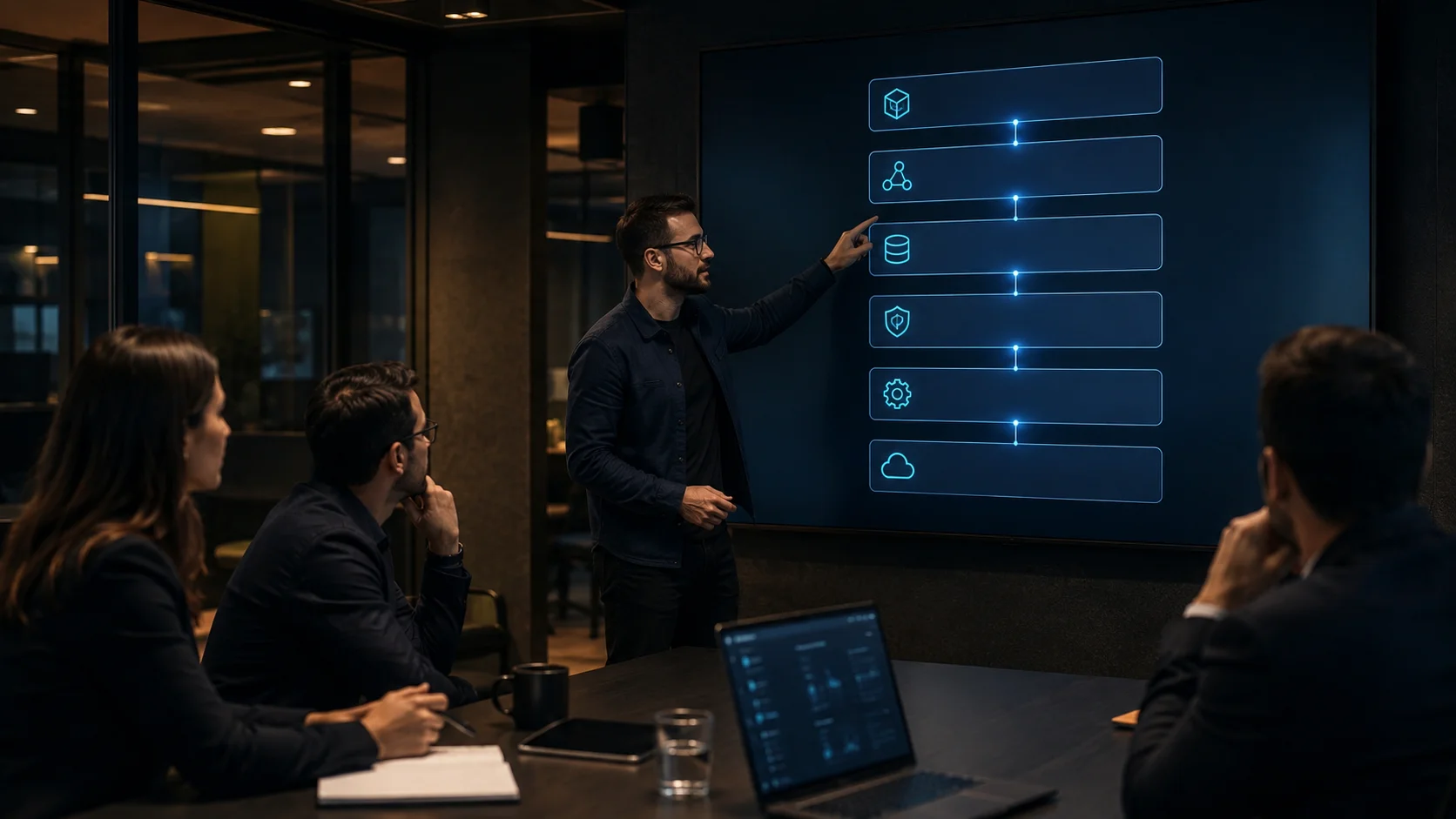
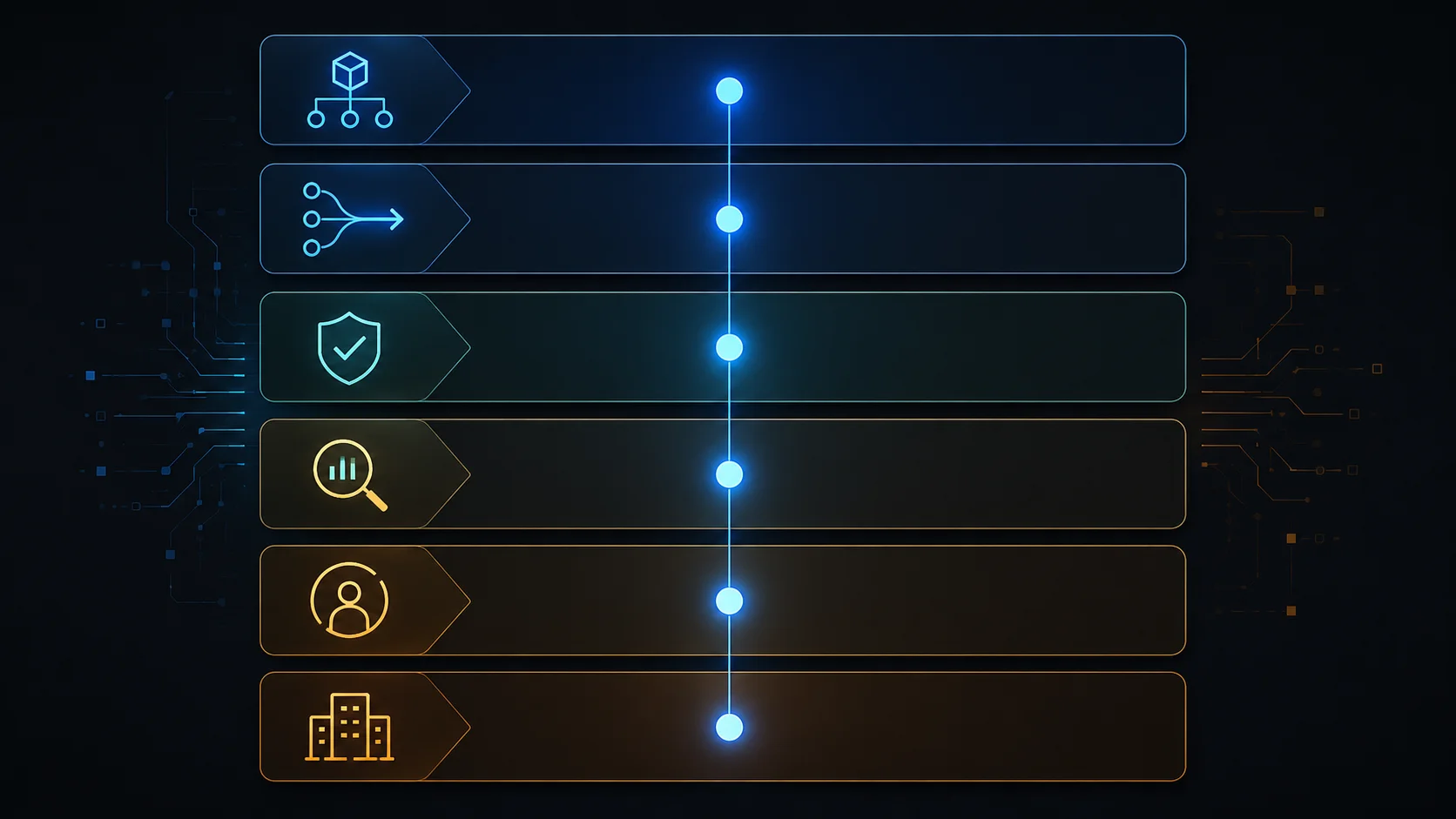
A practical enterprise architecture can be viewed as six logical layers.
Users / Business Applications
            │
     AI Agents & Workflows
            │
    Agent Orchestration Layer
            │
Model Routing & Execution Layer
            │
 Policy & Governance Layer
            │
Observability & Operations Layer
            │
Enterprise Systems • Models • Tools • Data
Each layer has a distinct responsibility.
Layer 1: AI agents and workflow orchestration
The orchestration layer coordinates how agents execute work. Responsibilities commonly include task planning, multi-step execution, tool selection, workflow sequencing, state management, and agent collaboration. This layer answers questions such as: which task should execute next, which tool should the agent call, and which specialist agent should receive the task.
Orchestration determines how work flows. It should not be responsible for enterprise governance decisions.
Layer 2: Model routing
Once an agent decides that a language model is required, another decision remains: which model should handle the request? A routing layer can evaluate factors such as workload type, latency requirements, privacy requirements, model availability, operational cost, and organizational policy.
For example, simple summarization might use a lower-cost model, sensitive internal documents might be routed to a private deployment, and complex reasoning tasks might justify a frontier model. This separates business policy from hardcoded application logic and makes routing decisions easier to evolve over time. See LLM Model Routing Strategy for Enterprise AI for a deeper treatment.
Layer 3: Policy and governance
As organizations adopt more agents, consistency becomes increasingly important. A governance layer helps answer questions such as: can this user invoke this agent, is the requested tool approved, can this data leave the organization, should a private model be used, does this workflow require additional review, and should this action be blocked?
Without centralized governance, individual agent teams often implement different policies, creating inconsistent behavior across the enterprise. A policy layer provides a common operating framework rather than requiring every agent to implement governance independently.
Layer 4: Observability and operational logging
Once agents enter production, visibility becomes essential. Operational observability typically focuses on questions such as: which agents are active, which workflows succeed or fail, which models are being used, how much does each workflow cost, where are bottlenecks occurring, and which policies generate frequent exceptions?
This differs from application debugging. It provides operational insight into how AI is functioning across the organization and supports continuous improvement of routing, governance, and workflow design.
Layer 5: Human-in-the-loop checkpoints
Not every AI decision should execute autonomously. Many enterprise workflows benefit from clearly defined review points — for example, approving customer communications, releasing legal documents, authorizing financial actions, reviewing procurement recommendations, and validating HR decisions.
Rather than slowing every workflow, human checkpoints can be introduced where business impact or organizational policy requires additional oversight. The goal is proportionate governance rather than eliminating automation.
Layer 6: Enterprise systems and data
At the bottom of the architecture sit the systems agents interact with: ERP platforms, CRM systems, document repositories, RAG pipelines, databases, APIs, collaboration tools, and private and cloud-hosted models.
A well-designed control plane coordinates access to these systems instead of embedding connection logic independently inside every agent. This reduces duplication and improves consistency as AI deployments expand.
Putting the architecture together
The complete flow typically looks like this: a user or application submits a request; an agent determines how the task should be completed; the orchestration layer coordinates execution; the routing layer selects an appropriate model; governance policies evaluate permissions and constraints; the agent interacts with enterprise tools and data; operational telemetry captures usage, outcomes, and system behavior; and human review occurs where organizational policy requires it.
Each layer remains focused on a specific responsibility, making the overall architecture easier to evolve as AI adoption grows.
Where AgenixCore fits
AgenixHub is an enterprise AI implementation and operations company. Its flagship product, AgenixCore, is an AI control plane for private, governed, cost-efficient enterprise AI.
Based on AgenixHub's published product positioning, AgenixCore is designed as the governed layer connecting people, applications, models, tools, and data. Publicly described capabilities include request routing, access governance, context handling, cost controls, observability, and audit-ready operations.
Within the reference architecture above, AgenixCore fits primarily across the model routing, policy and governance, and observability layers rather than replacing an orchestration framework. In other words, an organization may continue using its preferred agent framework while introducing a control layer that helps standardize routing, governance, and operational visibility across the broader AI estate.
Design principles for enterprise AI
As AI agents become part of core business operations, a few architectural principles become increasingly valuable: separate orchestration from governance; avoid embedding business policies inside individual agents; route workloads based on policy, privacy, and business context, not only model capability; build observability into the architecture from the beginning; introduce human review where business impact justifies it; and treat AI governance as a continuous operating function rather than a one-time implementation.
These principles help organizations move from isolated AI agents to an enterprise-scale operating model.
Review notes
There is no single reference implementation suitable for every enterprise. Agent frameworks, orchestration engines, and model providers can be replaced over time; governance and operational visibility should remain consistent. Not every workflow requires the same level of policy enforcement or human review. Architecture should be driven by business requirements, data sensitivity, operational goals, and organizational scale.
FAQ
Does an AI agent framework replace a control plane?
No. Agent frameworks focus on execution and orchestration. A control plane focuses on governance, routing, operational visibility, and enterprise-wide management.
Can a control plane work with multiple AI models?
Yes. One of its primary purposes is coordinating AI operations across multiple model providers and deployment environments.
Where should governance policies live?
Centralizing governance policies makes them easier to maintain than embedding them inside individual agents or applications.
Is a control plane only useful for large enterprises?
Organizations with a small number of AI agents may not need a dedicated control plane immediately. As AI adoption expands across teams, models, and business systems, the operational benefits generally become more significant.
Conclusion
AI agents introduce a new layer of enterprise automation, but automation alone is not enough for production-scale AI. Organizations also need a way to govern, route, monitor, and continuously operate those agents across models, tools, users, and data. A reference architecture built around orchestration, routing, governance, observability, and human oversight provides a practical foundation for enterprise AI operations. As AI ecosystems become more distributed, the control plane increasingly becomes the operating layer that ties those components together.
Continue reading: