
Everything enterprise leaders need to know about AI governance, compliance timelines, and operational readiness
Artificial intelligence has moved from experimentation to core business operations. Organizations are using AI to improve productivity, automate workflows, support customer service, assist software development, analyze documents, and augment decision-making. As AI adoption grows, so does the need for governance.
The EU AI Act is the world's first comprehensive regulatory framework for artificial intelligence. It establishes obligations for different types of AI systems based on their intended use and level of risk, with implementation taking place over several years rather than all at once.
The challenge for many organizations isn't understanding that the AI Act exists—it's understanding what actually applies today. Search online and you'll encounter two conflicting narratives: "everything has been delayed until 2027," or "every company using ChatGPT now needs full AI Act compliance." Neither is correct.
This guide explains what has already taken effect, what changes in August 2026, what has been postponed to 2027 and 2028, and—most importantly—what enterprise AI teams should do now.
Quick answer
The EU AI Act entered into force on 1 August 2024, with different obligations becoming applicable over time. Prohibited AI practices and AI literacy requirements have already begun to apply, while Article 50 transparency obligations, enforcement becoming fully operational, AI regulatory sandboxes, and national supervision apply from 2 August 2026. Certain obligations for providers of qualifying high-risk AI systems were postponed to 2 December 2027, and some embedded-product obligations to 2 August 2028, following the Digital Omnibus political agreement. Most organizations using third-party AI models are deployers rather than providers, and their obligations depend on how AI is used—not simply on using an LLM.
Why this guide exists
Most enterprise teams don't have a legal problem—they have an operational one. Marketing uses ChatGPT. Engineering uses GitHub Copilot. HR experiments with AI-assisted drafting. Sales adopts meeting assistants. Customer support deploys AI chatbots. Within months, dozens of AI systems appear across the organization, often with little centralized visibility.
At that point, questions become less about AI adoption and more about AI operations: which AI systems are employees using, which models process sensitive business information, who approves new AI deployments, where should human review be required, and which regulatory obligations apply to which systems.
The EU AI Act doesn't answer every operational question, but it provides an important framework for thinking about AI governance. The organizations that navigate it most effectively are likely to be those that treat governance as an ongoing operating capability rather than a one-time compliance exercise.
What is the EU AI Act?
The EU AI Act is a regulation adopted by the European Union to establish a common legal framework for artificial intelligence. Rather than regulating every AI system in the same way, the Act takes a risk-based approach. Different obligations apply depending on the role of the organization, the intended use of the AI system, and the level of risk associated with that use.
The regulation does not say "every company using AI must do the same things." Instead, it asks: who developed or placed the AI system on the market, who is using the AI system, what is the AI system intended to do, does it fall into a regulated high-risk category, and are transparency obligations relevant?
For enterprise leaders, understanding these distinctions is far more useful than trying to memorize legal terminology.
The EU AI Act timeline
One reason the regulation has created confusion is that it is being implemented gradually rather than on a single date.
| Date | Milestone |
|---|---|
| 1 August 2024 | EU AI Act enters into force. |
| 2 February 2025 | Prohibited AI practices become applicable. AI literacy requirement begins. |
| 2 August 2025 | Obligations for providers of general-purpose AI (GPAI) models and penalty provisions become applicable. |
| 2 August 2026 | Article 50 transparency obligations apply. Enforcement structures become operational. AI regulatory sandboxes and national supervision continue according to the implementation timeline. |
| 2 December 2027 | Certain obligations for providers of qualifying Annex III high-risk AI systems apply following the Digital Omnibus political agreement. |
| 2 August 2028 | Certain obligations relating to Annex I embedded-product high-risk AI systems apply. |
Understanding this timeline is essential because organizations often assume that August 2026 either marks the beginning of the regulation or the postponement of the entire framework. Neither assumption reflects how the implementation schedule actually works.
What actually changes on 2 August 2026?
August 2026 is a significant milestone—but not for the reasons many headlines suggest. Several important parts of the AI Act become applicable on 2 August 2026, including Article 50 transparency obligations (covering AI-human interaction disclosures, deepfake labeling, and certain AI-generated public-interest content), enforcement becoming fully operational as supervisory structures move from preparation toward implementation, AI regulatory sandboxes supporting supervised AI innovation, and national supervisory arrangements enabling oversight at the Member State level.
These provisions were not postponed by the Digital Omnibus political agreement. For many organizations, this means August 2026 is less about introducing entirely new AI programs and more about reviewing existing deployments to understand whether transparency obligations apply and whether governance processes are fit for purpose.
What didn't change?
One of the biggest misconceptions surrounding the August 2026 milestone is that the AI Act suddenly imposes the full compliance framework on every organization using AI. That is not the case.
Using AI does not automatically mean your organization becomes an AI provider, that every AI system is classified as high risk, that comprehensive AI Act logging is required, or that every AI deployment must undergo the same compliance process. The regulation differentiates between providers and deployers, between high-risk and lower-risk use cases, and between different categories of obligations. Those distinctions become increasingly important as enterprises expand AI adoption across multiple business functions.
Why so many people think the AI Act was delayed
If you've read articles saying the EU AI Act has been "delayed," you're not alone. The source of that confusion is the Digital Omnibus political agreement announced in May 2026. Many summaries reduced the announcement to a single sentence: "the AI Act has been postponed." While that headline is easy to understand, it is also incomplete.
What actually happened is more specific. The political agreement postponed certain obligations for providers of qualifying high-risk AI systems, including areas such as risk management, conformity assessment, technical documentation, logging, quality management, and human oversight. Those obligations now apply from 2 December 2027 for Annex III high-risk systems, with certain Annex I embedded-product obligations moving to 2 August 2028.
Importantly, the agreement did not postpone the entire regulation. Transparency obligations under Article 50, AI literacy, enforcement becoming operational, regulatory sandboxes, and national supervisory arrangements continue according to the implementation timeline. This distinction is one of the most important ideas in the entire AI Act.
Are you a provider or a deployer?
This is arguably the most important distinction in the entire AI Act. Many organizations assume that because they use ChatGPT, Claude, Gemini, Microsoft Copilot, or an internally developed AI assistant, they have automatically become an AI provider. In most cases, they haven't.
What is a provider?
Broadly speaking, a provider is an organization that develops an AI system or places an AI system on the market or puts it into service under its own name or trademark — for example, a software company selling its own AI product, a startup commercializing an AI platform under its own brand, or an organization that substantially modifies an AI system in ways that affect its regulatory responsibilities.
What is a deployer?
A deployer is an organization that uses an AI system as part of its operations — for example, organizations using ChatGPT, Claude, Gemini, Microsoft Copilot, internal document assistants, customer support assistants, engineering copilots, AI-powered search, or contract summarization tools. For most enterprises today, this is the more common role.
A practical decision tree
Do you develop or place an AI system on the market under your own name?
        │
       Yes → You may be a Provider
        │
        No
        │
Are you substantially modifying an AI system in a way that changes compliance responsibilities?
        │
       Yes → You may have Provider obligations
        │
        No
        │
Are you primarily using AI systems developed by another provider?
        │
       Yes → You are usually a Deployer
This simplified framework answers the question for many organizations. The legal definitions contain additional detail, but from an enterprise governance perspective, this distinction is often enough to determine which areas deserve further analysis. For the full breakdown with worked examples, see Am I a Provider or a Deployer Under the EU AI Act?
What is Article 50?
One of the most important milestones on the AI Act timeline is 2 August 2026, when Article 50 transparency obligations become applicable. Transparency is exactly what it sounds like: in certain situations, people interacting with AI—or receiving specific categories of AI-generated content—should receive appropriate transparency.
At a high level, Article 50 includes transparency requirements relating to AI systems that interact directly with people, deepfake labeling, and certain AI-generated public-interest content. These requirements remain part of the August 2026 implementation timeline and were not postponed by the Digital Omnibus political agreement.
Article 50 does not automatically require organizations to redesign every AI system, rebuild existing AI architecture, create extensive documentation for every chatbot, or treat every AI deployment as high risk. Instead, organizations should review AI deployments individually and determine whether the transparency provisions are relevant to those specific use cases.
What counts as a high-risk AI system?
Another common misconception is that every AI agent is automatically high risk. That isn't how the AI Act works. High-risk status depends primarily on the intended use of the AI system, not on whether it uses a large language model or calls itself an AI agent.
The regulation identifies categories of AI systems that may be considered high risk under specific circumstances, including certain AI systems used in recruitment and hiring, education, healthcare, law enforcement, migration, credit assessment, and critical infrastructure. Simply using ChatGPT internally does not automatically place an organization into the high-risk regime.
This distinction matters because many of the obligations people associate with the AI Act — risk management, conformity assessment, technical documentation, comprehensive logging, and human oversight — are specifically connected to qualifying high-risk AI systems. These are also the obligations whose implementation was postponed until December 2027 for qualifying Annex III systems, which is why organizations should avoid assuming that every AI deployment immediately requires the full compliance framework.
What does AI literacy mean in practice?
One of the less-discussed—but already applicable—parts of the AI Act is the AI literacy requirement, which has applied since 2 February 2025. Unlike many regulatory obligations, AI literacy is not primarily about documentation. It is about people: organizations should ensure that individuals working with AI possess an appropriate level of understanding for their role, proportionate to how AI is used within the organization.
A customer support agent using an AI assistant needs different knowledge than an engineer building AI workflows or a procurement team evaluating AI vendors. Effective AI literacy programs typically help employees understand when AI is appropriate, where human judgment remains necessary, how to protect sensitive information, the limitations of AI-generated outputs, organizational AI policies, and when additional review or escalation is required.
Do you need AI Act logging?
The short answer is: usually not, simply because you're using ChatGPT, Claude, Gemini, or another large language model. One of the biggest misconceptions surrounding the AI Act is that every AI deployment now requires detailed compliance logs. That isn't what the regulation says — comprehensive logging obligations are associated with qualifying high-risk AI systems, not every AI implementation.
Instead of asking "should we log everything?", organizations should ask "which of our AI systems actually require additional governance?" It's useful to separate legal obligations from good operational practice:
| Question | Legal requirement | Good governance practice |
|---|---|---|
| Log every ChatGPT conversation? | No | Depends on business needs |
| Record AI-assisted business decisions? | Depends on the use case | Often recommended |
| Monitor which AI models are used across departments? | Not generally required | Yes |
| Track AI usage trends? | Not generally required | Yes |
| Review AI outputs affecting customers or employees? | Depends on context | Strongly recommended |
| Maintain visibility into sensitive AI workflows? | Depends | Yes |
For the complete treatment of this question, see Do You Need EU AI Act Logging for Your ChatGPT or Claude Deployment?
A practical enterprise governance framework
Rather than treating governance as a legal project, many enterprises benefit from an operational framework. One practical model consists of six stages:
1. Inventory. Identify every significant AI system being used — commercial AI services, internal assistants, AI agents, RAG systems, embedded AI features, productivity copilots. Many organizations discover far more AI usage than expected.
2. Classify. For each system, determine provider or deployer, customer-facing or internal, sensitive or routine, public cloud or private deployment, regulated or lower-risk use case.
3. Assess risk. Not every AI workload deserves identical governance. Routine meeting summaries require different oversight than hiring recommendations, financial approvals, medical workflows, or customer eligibility decisions.
4. Apply policies. Once workloads are classified, organizations can establish consistent operating policies — approved models, data handling rules, prompt guidance, human review requirements, approval workflows, and transparency measures where applicable.
5. Monitor. Governance shouldn't stop after deployment. Continue asking which models are heavily used, whether policies are being followed, whether AI adoption has changed, and whether new AI systems have appeared.
6. Improve. Enterprise AI changes continuously — new models arrive every month, departments discover new use cases, business priorities evolve. Governance becomes an ongoing operating function rather than a one-time implementation project.
Industry examples
Manufacturing: governance priorities typically include operational visibility, transparency where applicable, and protection of proprietary engineering information. See EU AI Act Transparency Rules for Manufacturing AI Systems for scenario-level detail.
Healthcare: organizations frequently deal with sensitive information and higher-impact decisions, requiring stronger oversight and careful consideration of applicable regulatory obligations beyond the AI Act.
Financial services: banks and financial institutions often focus on decision traceability, customer communications, risk management, and access controls.
Retail: the emphasis is often on consistency, transparency where applicable, and responsible customer interactions across support, merchandising, marketing, and inventory planning.
Common mistakes enterprise teams make
Treating every AI system identically (not every workload needs frontier models or identical governance); assuming AI governance equals compliance (governance also improves quality, cost control, and consistency); allowing every department to adopt AI independently (creates duplicated effort and fragmented tooling); and waiting until regulations force governance (building governance earlier is usually simpler than retrofitting it later).
Enterprise AI readiness checklist
Before expanding AI adoption, organizations should be able to answer "yes" to most of these: Do we know which AI systems are in use? Have we identified whether we're acting as providers or deployers? Have we reviewed whether Article 50 transparency obligations apply to relevant AI deployments? Have employees received appropriate AI literacy training? Do we know where AI influences important business outcomes? Do we have governance policies for AI usage? Can we monitor AI adoption across departments? Is there clear ownership for enterprise AI governance?
If several answers are "no," the priority is unlikely to be legal documentation alone — it is establishing a sustainable operating model for enterprise AI.
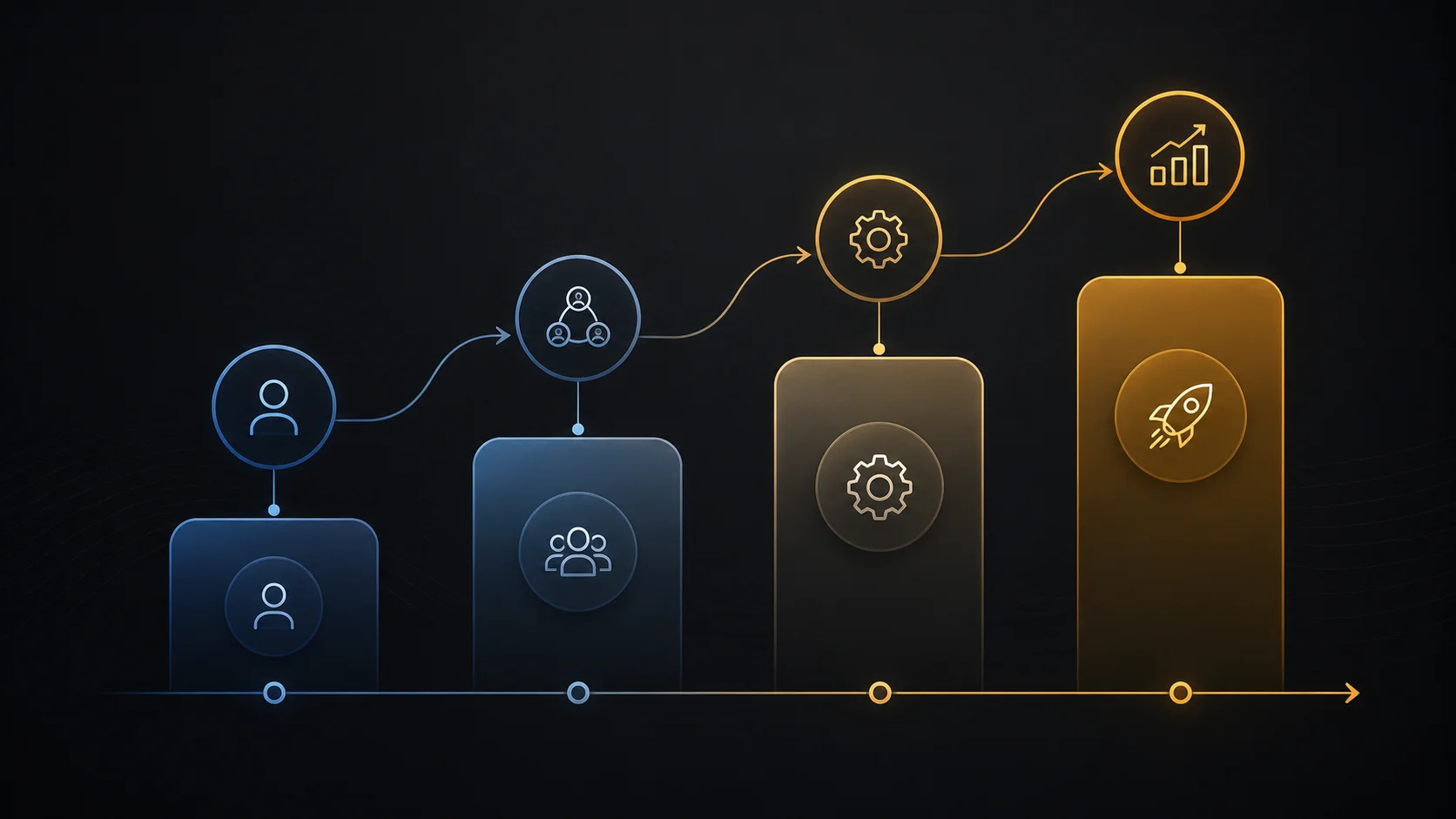
Operationalizing governance: Audit → Build → Operate
AI governance is an operating problem, not a single project. A typical organization may simultaneously use ChatGPT for content creation, Claude for document analysis, Microsoft Copilot for productivity, internal RAG systems for knowledge retrieval, private LLMs for sensitive workloads, AI agents for workflow automation, customer-facing AI assistants, and engineering copilots — each with different users, data sensitivity, business impact, and operational owners.
Organizations typically progress through four maturity stages:
| Stage | Characteristics |
|---|---|
| Experiment | Individual teams independently adopt AI tools with limited oversight. |
| Standardize | Approved tools, basic AI policies, and initial AI literacy programs emerge. |
| Govern | AI usage becomes visible across departments; higher-impact workflows receive additional oversight. |
| Operate | AI is managed continuously with monitoring, policy enforcement, governance reviews, and operational optimization. |
Audit: establish a factual understanding of enterprise AI usage — which systems are in use, which departments use them, where sensitive information is processed, which workflows rely on AI, and whether teams follow internal policies.
Build: implement a governance framework appropriate for the business — operating policies, workload classification, model selection guidance, AI literacy programs, governance workflows, human review processes, and deployment standards.
Operate: continue monitoring AI usage, reviewing deployments, updating policies, evaluating new models, and improving operational efficiency over time. This continuous-improvement mindset is often what separates successful enterprise AI programs from isolated pilots.
Where AgenixCore fits
AgenixHub is an enterprise AI implementation and operations company. Its flagship product, AgenixCore, is an AI control plane for private, governed, cost-efficient enterprise AI.
AgenixCore is designed to support organizations operating AI across multiple teams, models, and environments. Rather than acting as a legal compliance product, it provides operational capabilities that help organizations build more consistent AI governance: AI observability (understanding which AI models are being used, where, and how adoption evolves), governance controls (supporting internal AI operating policies across business units), access management (managing who can access particular AI tools, models, or workflows), operational monitoring (visibility into AI operations to identify usage changes and support governance activities), and AI workload management (helping match workloads to model types based on cost, privacy, latency, and performance).
These capabilities can support organizations implementing enterprise AI governance. They should not be viewed as replacing legal advice or organizational compliance responsibilities — compliance depends on the organization's specific AI systems, business processes, governance decisions, and applicable regulations. See AgenixCore and the EU AI Act: Governance Features Mapped to Article 50 for the full feature mapping and important limitations.
Five common myths about the EU AI Act
Myth 1: Everything moved to 2027. Reality: only certain obligations for providers of qualifying high-risk AI systems were postponed. Article 50 transparency obligations, enforcement becoming operational, AI regulatory sandboxes, and national supervision remain applicable from 2 August 2026.
Myth 2: Using ChatGPT makes us a provider. Reality: most organizations using third-party AI models are deployers rather than providers.
Myth 3: Every AI system needs comprehensive AI Act logging. Reality: comprehensive logging obligations are linked to qualifying high-risk AI systems rather than every AI deployment.
Myth 4: Only AI vendors need to think about the AI Act. Reality: deployers also have responsibilities, including areas such as AI literacy and, depending on the deployment, Article 50 transparency obligations.
Myth 5: Every AI agent is automatically high risk. Reality: high-risk classification depends on the intended use of the AI system — not whether it is called an AI agent.
FAQ
Does the EU AI Act apply outside Europe?
The AI Act can apply in circumstances defined by the regulation, including certain AI systems placed on the EU market or whose outputs are used within the EU. Organizations should assess applicability based on their activities and seek legal advice where appropriate.
Are most enterprises providers or deployers?
Most organizations using third-party AI services such as ChatGPT, Claude, Gemini, or Microsoft Copilot are typically deployers.
What changes on 2 August 2026?
Article 50 transparency obligations become applicable, enforcement becomes fully operational, and AI regulatory sandboxes and national supervisory arrangements continue according to the implementation timeline.
Did the AI Act get postponed?
Not entirely. Certain obligations relating to qualifying high-risk AI systems were postponed, while several other provisions continue according to the original implementation schedule.
Does every organization need AI Act logging?
No. Comprehensive logging obligations are associated with qualifying high-risk AI systems rather than every AI deployment.
Is AI literacy already required?
Yes. The AI literacy requirement has applied since 2 February 2025.
Should organizations begin preparing now?
Yes. Even where particular legal obligations do not yet apply, building governance, visibility, AI literacy, and operational oversight early is generally easier than retrofitting these capabilities after AI adoption has expanded across the business.
Final takeaways
If there is one lesson from the EU AI Act, it is this: good AI governance is becoming an operational capability, not just a legal requirement. The organizations that will adapt most effectively are unlikely to be those with the largest legal teams. They will be the organizations that understand where AI is used, how AI creates business value, which workflows require additional oversight, how governance evolves alongside AI adoption, and how to operate AI consistently across the enterprise.
The EU AI Act provides an important regulatory framework, but responsible AI operations extend beyond compliance. Governance improves visibility. Visibility improves decision-making. And better operational decisions ultimately help organizations adopt AI more confidently, efficiently, and responsibly.
About AgenixHub
AgenixHub helps enterprises move from fragmented AI adoption to governed AI operations. Through its Audit → Build → Operate approach, it helps organizations evaluate AI workloads, establish governance frameworks, improve model selection, and operationalize AI across privacy, cost, quality, latency, and adoption objectives.
Its flagship product, AgenixCore, serves as an AI control plane that supports enterprise AI operations through governance, observability, monitoring, and operational management capabilities. These features are designed to help organizations build consistent AI operating practices and should be implemented alongside each organization's own compliance, legal, and risk management processes.
Continue reading this cluster:
- EU AI Act 2026: What Actually Changes in August?
- Am I a Provider or a Deployer Under the EU AI Act?
- Do You Need EU AI Act Logging for Your ChatGPT or Claude Deployment?
- 5 Things Companies Get Wrong About the EU AI Act's August 2026 Deadline
- EU AI Act Transparency Rules for Manufacturing AI Systems
- AgenixCore and the EU AI Act: Governance Features Mapped to Article 50